Next.js 15 vs Traditional Web Development: Why Modern SaaS Companies Are Switching
In the early days of SaaS development, Single Page Applications (SPAs) built with raw React, Vue, or Angular were the gold standard. They delivered rich interfaces compared to legacy multi-page websites. However, as web products scale, SPAs suffer from heavy initial bundle sizes, slow first-load speeds, and poor search engine crawlability.
In 2026, modern SaaS companies are switching to Next.js 15. By combining server-side rendering logic with client-side interactivity, Next.js 15 delivers fast page load times and boosts SEO rankings.
If you are currently evaluating your product's frontend architecture, upgrading to a framework like Next.js 15 via professional Web Development Services is a crucial step to scaling operations.
---
The SPA Performance Bottleneck
Traditional React applications compile to a blank HTML file alongside a massive JavaScript bundle. When a user or search engine crawler visits your website: 1. They receive a blank page. 2. The browser downloads the javascript bundle. 3. The browser compiles and executes the code to render the visual elements.
This client-side rendering (CSR) model results in high First Contentful Paint (FCP) times, slow Interaction to Next Paint (INP) response rates, and poor keyword indexing because search bots frequently fail to index JavaScript-heavy content.
---
How Next.js 15 Solves Performance Gaps
Next.js 15 addresses these limitations by introducing server-first compilation models:
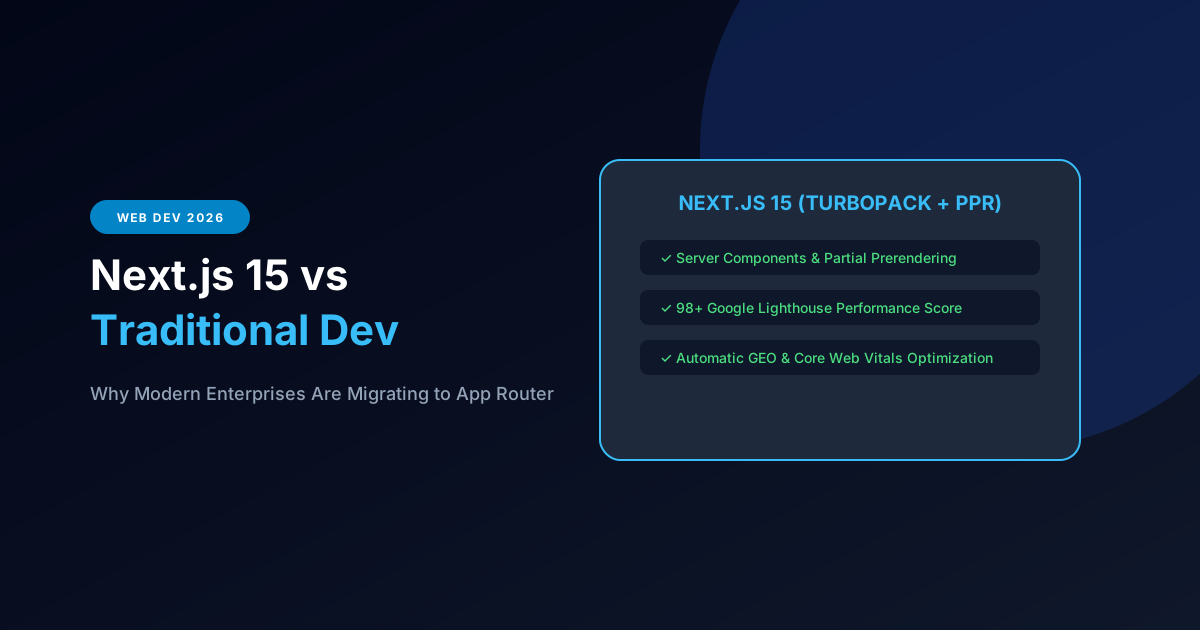
1. React Server Components (RSC) By default, components in Next.js 15 compile on the server. Your database calls, file reading operations, and security checks run on secure backend layers before delivering static HTML to the user's browser. This keeps massive node modules out of client bundles, reducing JavaScript loading overhead by up to 50%.
2. Multi-Mode Rendering Options Next.js 15 allows you to customize the rendering model for every page route individually: * Static Site Generation (SSG): Pre-compiles pages (like landing pages or blog posts) into raw HTML files during build time for instant loading. * Incremental Static Regeneration (ISR): Updates static pages in the background as database records change without rebuilding the entire application. * Server-Side Rendering (SSR): Generates custom HTML dynamically on every request, perfect for authenticated dashboards.
3. Core Web Vitals Optimization
Next.js 15 includes automated components that resolve layout shifts and optimize loading times:
* next/image handles lazy-loading, WebP conversion, and layout shifts automatically.
* next/font compiles local custom fonts to prevent flash-of-unstyled-text (FOUT) rendering loops.
---
Why SaaS Products Benefit from Next.js 15
- Accelerated Conversions: Fast landing pages mean fewer drop-offs. Upgrading your marketing pages to static Next.js pages directly increases lead signups.
- Clean Code handovers: By building on a structured framework rather than ad-hoc bundlers, hiring new React engineers is seamless. Our specialized team of Next.js Developers can integrate directly into your repository and ship features on day one.
- Zero-Downtime Scalability: By deploying to standard container systems or serverless platforms, your web app handles traffic spikes easily. We design custom cloud setups on secure Cloud environments to keep SaaS applications online 24/7.
---
Planning Your Next.js 15 Migration
If you are running a legacy WordPress portal or an aging SPA React framework, migrating to Next.js 15 does not require a complete rewrite. You can migrate routes incrementally, keeping your current backend APIs in place.
Explore our Case Studies to see how we've helped startups compile fast web platforms, or contact us directly on our Contact Page to discuss your migration path.
Mr. Vyas
Founder & Lead Tech Architect at Bliss Technologies. Specialist in Enterprise AI RAG pipelines, Next.js 15, high-availability mobile backends, and cloud DevOps architectures.
Frequently Asked Questions
What is the difference between Next.js 15 and traditional React?
Traditional React apps are client-side rendered (CSR), meaning the user's browser must download and execute all JavaScript before seeing content. Next.js 15 renders React on the server first, delivering instant static HTML to the user.
How does Next.js 15 improve SEO?
Because Next.js 15 prerenders HTML on the server, search engines crawl pre-filled HTML documents instead of blank pages, boosting keyword indexing and ranking.
Is migration from legacy React to Next.js 15 complex?
It depends on complexity. React routing structures must be mapped to Next.js App Router folders, and client state layers must be configured for Server Components compatibility.
Does Next.js 15 require custom cloud hosting?
While Vercel is optimized for it, Next.js 15 compiles to static bundles or server nodes that run on standard AWS VPC, Google Cloud, or Docker environments.
Why is Next.js 15 better for SaaS products?
It enables fast loading dashboards, headless payment integrations, and instant landing page performance, which directly improves user signups and conversions.
Related Articles & Insights
View All Articles →
How AI Agents Are Transforming Customer Support in 2026