Healthcare App Development: HIPAA Security & EHR Integration Guide for Clinics
Digital health platforms, remote patient monitoring tools, and telemedicine apps have transformed healthcare delivery in 2026. However, building software for the healthcare industry requires meeting strict data privacy standards, regulatory compliance, and seamless integration with hospital systems.
A single data leak or non-compliant database schema can result in massive regulatory fines and irreparable brand damage.
If you are a health-tech founder or medical clinic director, partnering with experts in Healthcare Software Development and Healthcare Industry Solutions ensures your software is secure, compliant, and scalable.
---
The 4 Pillars of HIPAA-Compliant Healthcare App Development
To ensure Protected Health Information (PHI) is safe, your healthcare software must incorporate four security layers:
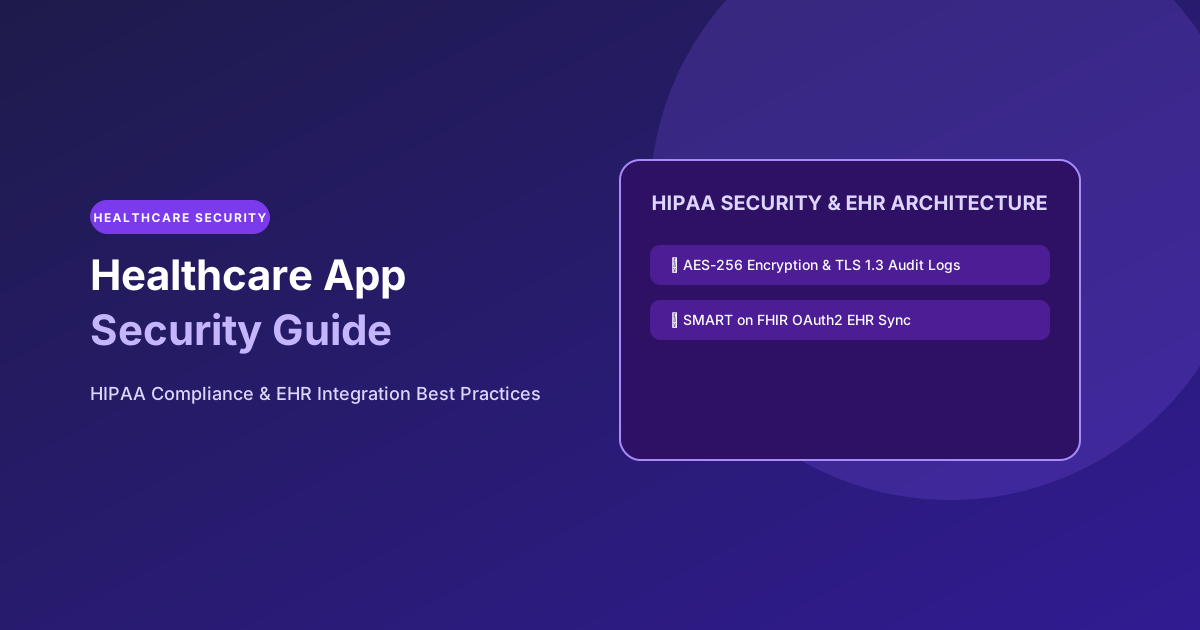
1. Data Encryption (In Transit & At Rest) * At Rest: Database records, patient records, and uploaded lab documents must be encrypted using AES-256 encryption keys. * In Transit: All communications between mobile apps, web portals, and backend API servers must use TLS 1.3 cryptographic protocols.
2. Strict Authentication & Role-Based Access (RBAC) * Implement Multi-Factor Authentication (MFA) or biometric authentication (FaceID / Fingerprint) for patient and doctor logins. * Role-Based Access Controls ensure doctors only see their assigned patients, while billing administrators only see financial records without medical history access.
3. Immutable Audit Trails & Logging * Every database read, update, or export event involving PHI must be logged in an immutable audit database. * Audit logs must record *who* accessed the data, *when* it was accessed, and *what* changes were made.
4. Business Associate Agreements (BAA) * Any third-party cloud infrastructure (AWS, Google Cloud, Azure) or API service provider (Twilio for SMS, WebRTC for video) handling patient data must sign a formal Business Associate Agreement (BAA).
---
Integrating Modern EHR/EMR Systems (FHIR & HL7)
Connecting your mobile or web application to hospital Electronic Health Record (EHR) systems like Epic, Cerner, or Athenahealth is vital for syncing patient charts and lab results.
Moving from Legacy HL7 to Modern FHIR While older hospital installations use legacy HL7 v2 messaging, modern health-tech platforms utilize FHIR (Fast Healthcare Interoperability Resources) RESTful APIs.
- SMART on FHIR: Allows your custom patient portal to launch securely inside EHR software using OAuth2 authentication.
- Bi-Directional Sync: Patient appointments booked on your mobile app automatically sync to the clinic's master EHR calendar in real time.
---
Key Features of Next-Generation Healthcare Apps
- HD Telehealth Video Consultations: Secure WebRTC video rooms with end-to-end encryption.
- AI-Assisted Symptom Triage: Preliminary AI screening tools that help patients categorize symptoms before speaking with a doctor.
- E-Prescription & Lab Integration: Direct routing of prescriptions to local pharmacies and automated lab result delivery.
If you need robust backend infrastructure for your medical platform, explore our Custom Software Development offerings.
---
Build Your Secure Healthcare Platform Today
Building a healthcare app requires deep domain knowledge, strict compliance engineering, and reliable backend infrastructure.
Ready to build a HIPAA-compliant medical application? Contact our team directly on our Contact Page to schedule a confidential engineering review.
Mr. Vyas
Founder & Lead Tech Architect at Bliss Technologies. Specialist in Enterprise AI RAG pipelines, Next.js 15, high-availability mobile backends, and cloud DevOps architectures.
Frequently Asked Questions
What is required to make a healthcare app HIPAA-compliant?
HIPAA compliance requires end-to-end data encryption (AES-256 in transit and at rest), strict user authentication (MFA/biometrics), audit log tracking, role-based access control (RBAC), and signed Business Associate Agreements (BAA) with cloud vendors.
What is the difference between HL7 and FHIR standards in healthcare software?
HL7 is a legacy messaging standard used by older hospital systems. FHIR (Fast Healthcare Interoperability Resources) is a modern, RESTful API standard designed for web and mobile health apps.
How long does it take to build a HIPAA-compliant telemedicine app?
A production-ready telemedicine MVP with secure video consultations, patient scheduling, and EHR syncing takes approximately 8 to 12 weeks to develop.
Can we integrate patient mobile apps with Epic or Cerner EHR systems?
Yes. Using SMART on FHIR OAuth2 protocols, we connect patient mobile applications securely to EHR systems like Epic, Cerner, or Athenahealth.
What are the risks of non-compliance in health-tech apps?
Non-compliance can lead to severe financial penalties from regulatory authorities (up to $1.5M per year for data breaches), loss of medical operating licenses, and brand reputation damage.
Related Articles & Insights
View All Articles →
How AI Agents Are Transforming Customer Support in 2026